


The Human Remains Team's Summer
CONTENT WARNING: this post contains photographs of human bones
In the 2025 season, the human remains team spent several weeks in The Church of St Mary the Virgin in Sedgeford. We ran our annual week-long “Introduction to Human Remains” course, as well as two weeks of human remains volunteers.
During the course, we cover basic skeletal anatomy, and how to assess human remains to determine an individual’s age at death, sex, height, and any illnesses or injuries they may have had. Participants get the chance to record a whole individual skeleton to see how much we can learn about the people of early medieval Sedgeford.

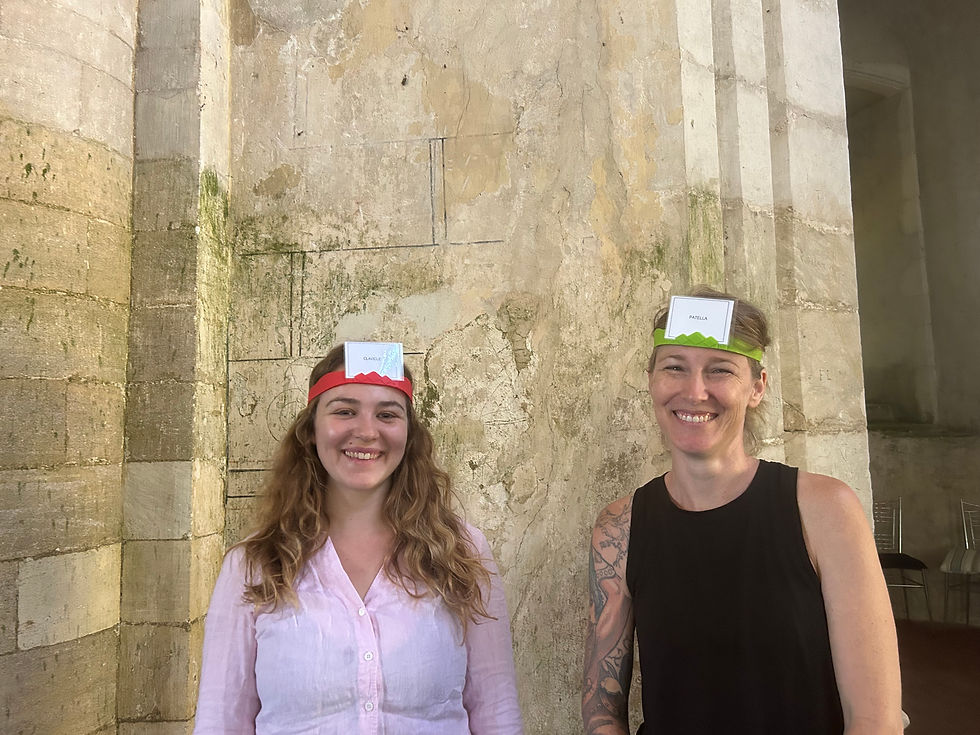
Our volunteers all have experience working with human remains, either from doing our SHARP course or elsewhere. We always start the week with some human remains-related games to revise and practice our anatomy knowledge.
For the last few years, our human remains volunteers have been helping study our disarticulated remains in more detail. Most of the skeletons excavated from Boneyard are “articulated”, where the individual is found with their body in the position they were buried in. The early medieval cemetery was used intensively over several centuries (c600-850AD), and the area was used by others later. That means that many of the burials were disturbed by other burials, historical ditches, modern ploughing, and earlier archaeological investigations from the 1950s. As we excavated the burial ground, we found “disarticulated” human remains, where bones or fragments of bones were found away from the rest of their skeleton.

Most archaeological excavations only record these bones and fragments to a very basic level. We are recording these bones and fragments to the same level as we record the “articulated” human remains, with the aim of learning as much about these individuals, and as far as possible reunite these bones with the rest of their skeletons.
This is a big undertaking, but we have been making good progress. We have managed to reunite several disarticulated bones with incomplete skeletons. We shared some of our findings so far at the British Association for Biological Anthropology and Osteoarchaeology annual conference last year.
This year, our volunteers were able to identify several examples of diseases that we haven’t seen in the articulated skeletons so far. We were also able to use the disarticulate human remains excavated in the earliest years of SHARP to better understand the structure of the burials from the latest part of the cemetery.
We look forward to learning more about these individuals next season. Hopefully see you there!


Comments