


A Roman Cremation Urn
CONTENT WARNING: this post contains photographs of human bone fragments
During an excavation in Saggy Horse Field in 2019, a cremation urn and associated votive pottery were found. This is the second cremation burial excavated by SHARP, after excavating “the body in the oven” in 2006, an individual who was buried in the oven of a Roman grain drier with flue system.

A cremation is the act of burning a human body as a way of treating the dead. Cremation is an intensive and expensive way of treating the dead, in terms of time, effort, and materials for the pyre. As with modern cremations, it was done for a purpose, based on ideological, cultural, and spiritual belief systems.
In Saggy Horse Field, we found three pottery vessels, one containing cremated human remains, the other two contained no finds. We hope to undertake residue testing to understand what might have been inside. The pottery is all from the 1st-2nd century (early Roman period).
Vessels during excavation Cleaned vessels on display
In order to gain as much information from the urns, before excavating the contents, we were able to perform CT imaging of the vessels. In the second more detailed picture, you can see that nearly all of the bone fragments are right at the bottom of the vessel.
CT scans of three vessels CT scan details
There is plenty more to be learnt from these images through more detailed analysis of the data. For example, we can look for anything else placed in the vessel that hasn’t survived for us to study physically, like fabric.

Once the vessels were imaged, they were carefully “micro-excavated”. The vessels were slowly dug in 2cm spits, with every find carefully located and documented. We also recorded the whole process, so that we can look back for further details and use it for teaching.

Once the excavation was completed, each bone fragment was cleaned, identified where possible, and carefully recorded. You can see two examples of bone fragments below. The heat of the cremation makes the bones warp and crack, and they change colour depending on the heat of the fire – whiter bones have been in the hottest part of the fire. This can all make identification of what bone each fragment is from challenging, and for some of the smallest fragments this isn’t possible.
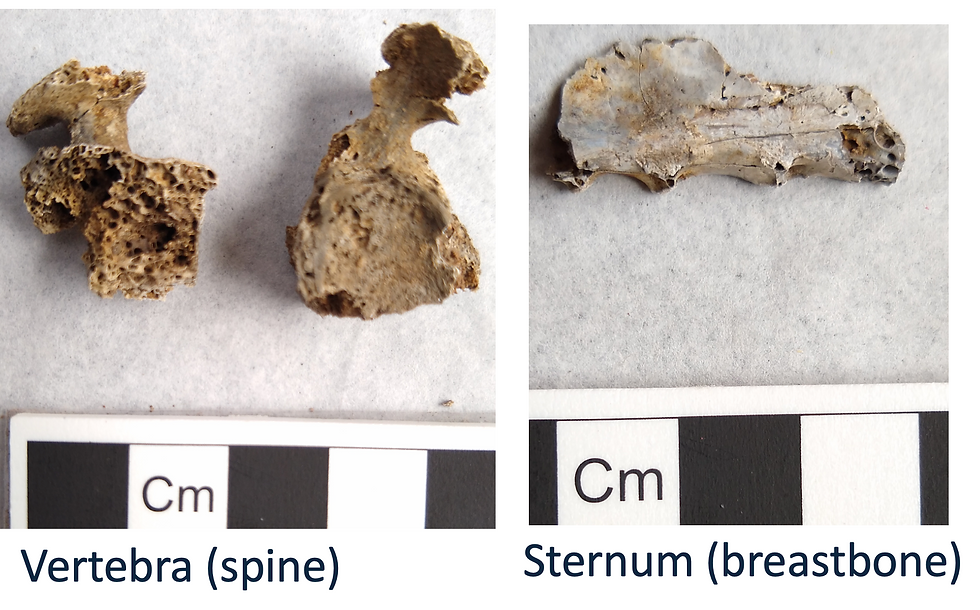
From the initial analysis of the fragments, we believe this is part of a single adult individual. We are unable to tell their sex or cause of death. We know there is still more we can learn about them as we study the bone fragments, CT images, and pottery in more detail.


Comments